rexresearch1
Duckweed Cultivation
https://en.wikipedia.org/wiki/Lemnoideae
Lemnoideae
Close-up of two different duckweed types: Spirodela polyrrhiza and Wolffia globosa: The latter are less than 2 mm long.
Scientific classification Edit this classification
Kingdom: Plantae
Clade: Tracheophytes
Clade: Angiosperms
Clade: Monocots
Order: Alismatales
Family: Araceae
Subfamily: Lemnoideae
Genera : Lemna Spirodela Wolffia Wolffiella
Synonyms : Lemnaceae
Lemnoideae is a subfamily of flowering aquatic plants, known as duckweeds, water lentils, or water lenses. They float on or just beneath the surface of still or slow-moving bodies of fresh water and wetlands. Also known as bayroot, they arose from within the arum or aroid family (Araceae),[1] so often are classified as the subfamily Lemnoideae within the family Araceae. Other classifications, particularly those created prior to the end of the twentieth century, place them as a separate family, Lemnaceae.
These plants have a simple structure, lacking an obvious stem or leaves. The greater part of each plant is a small organized "thallus" or "frond" structure only a few cells thick, often with air pockets (aerenchyma) that allow it to float on or just under the water surface. Depending on the species, each plant may have no root or may have one or more simple rootlets.[2]
Reproduction is mostly by asexual budding (vegetative reproduction), which occurs from a meristem enclosed at the base of the frond. Occasionally, three tiny "flowers" consisting of two stamens and a pistil are produced, by which sexual reproduction occurs. Some view this "flower" as a pseudanthium, or reduced inflorescence, with three flowers that are distinctly either female or male and which are derived from the spadix in the Araceae. Evolution of the duckweed inflorescence remains ambiguous due to the considerable evolutionary reduction of these plants from their earlier relatives.
The flower of the duckweed genus Wolffia is the smallest known, measuring merely 0.3 mm long.[3] The fruit produced through this occasional reproduction is a utricle, and a seed is produced in a bag containing air that facilitates flotation.
Duckweed in natural environments
One of the more important factors influencing the distribution of wetland plants, and aquatic plants in particular, is nutrient availability.[4] Duckweeds tend to be associated with fertile, even eutrophic conditions. They can be spread by sticking to the feathers of waterfowl and the skin or fur of other amphibious animals, and thus transported inadvertently to new bodies of water.[5] The plants may also be transported by flooding or other moving water. In water bodies with constant currents or overflow, the plants are carried down the channels and do not typically proliferate greatly, as they prefer still waters. However, in some locations, a cyclical pattern exists, driven by weather patterns, in which the plants proliferate greatly during periods of low water movement before they are carried away as rainy periods ensue.
Duckweed is an important, high-protein food source for waterfowl and many species of fish.[citation needed] The tiny plants provide cover for the vulnerable fry and tadpoles of many fishes and amphibians. The plants are used as shelter by pond species, such as bullfrogs and newts, and fish such as bluegills. They also provide shade and, although frequently confused with them, can reduce certain light-generated growths of photoautotrophic algae.
Use as human food crop
Duckweed is consumed in some parts of Southeast Asia, namely Laos, Thailand, and Myanmar.[6] In addition, it is also cultivated as a vegetable in Israel.[7] It produces more protein per square meter than soybeans, contains vitamins (such as B12), minerals, and carotenoids (lutein, beta-carotene), so it is sometimes cited as a significant potential food source for humans.[8]
Some initial investigations into what extent duckweed could be introduced to European markets have shown little consumer objection to the idea.[9] NASA's Caves of Mars Project identified duckweed as a top candidate for Martian food production projects.[10][11]
Invasive species
Despite some of these benefits, because duckweed thrives in high-nutrient wetland environments, the plants can be seen as a nuisance species when conditions favor excessive proliferation in environments that are traditionally low in nutrients or oligotrophic.
One example of this problem occurs within the Everglades, a mostly oligotrophic environment, when excess chemicals (that include fertilizers) are carried by storm runoff, or surface runoff, into its waterways.[12]
Urban runoff and agricultural pollution then begin to introduce increased levels of nutrients into the surrounding wetlands and waterways, which can cause a disruption to native ecology. These conditions allow for the invasion of a fast growing species such as duckweed to establish themselves, spread, and displace other native species such as sawgrass, and over time, result in widespread changes to the ecology of native sawgrass and slough habitats within the Everglades.[13]
Taxonomy
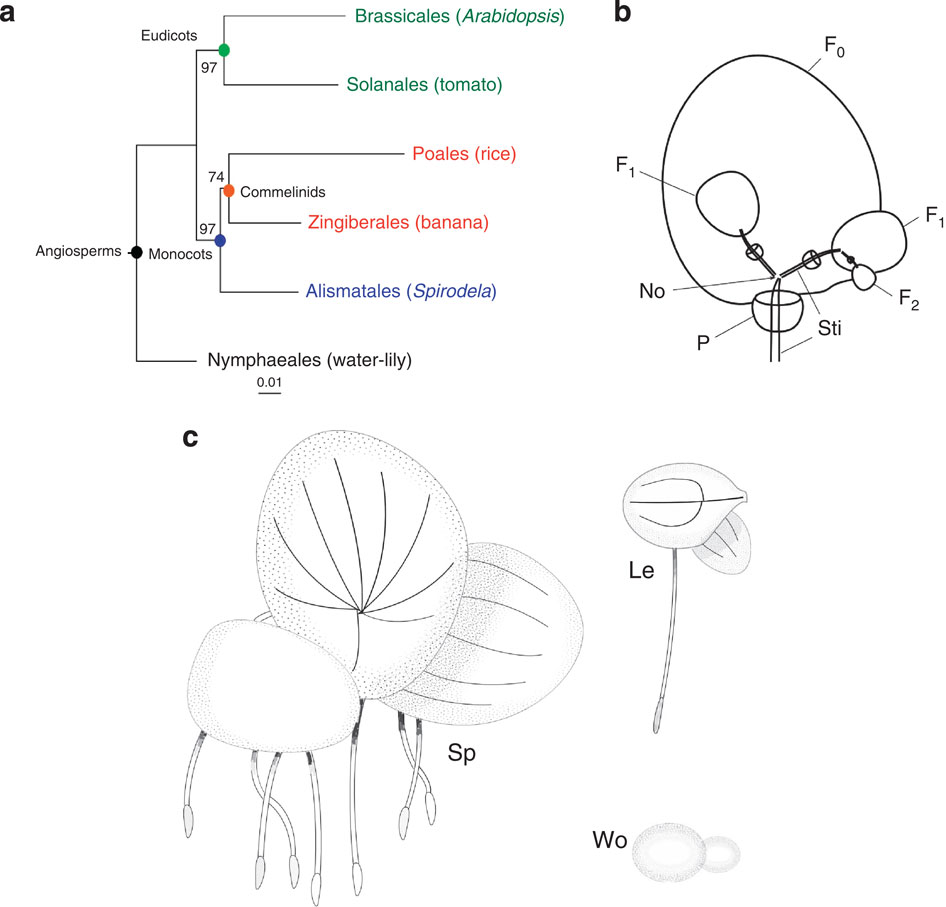
Duckweeds belong to the order Alismatales and the family Araceae. is a phylogenetic tree based on ribulose-1, 5-bisphosphate carboxylase large-subunit genes. is a schematic ventral view of Spirodela, to show the clonal, vegetative propagation of duckweeds. Daughter fronds (F1) originate from the vegetative node (No), from the mother frond F0 and remain attached to it by the stipule (Sti), which eventually breaks off, thereby releasing a new plant cluster. Daughter fronds may already initiate new fronds (F2) themselves before full maturity. Roots are attached at the prophyllum (P). (c) shows the progressive reduction from a leaf-like body with several veins and unbranched roots to a thallus-like morphology in the Lemnoideae.
The duckweeds have long been a taxonomic mystery, and usually have been considered to be their own family, the Lemnaceae. They primarily reproduce asexually. Flowers, if present at all, are small. Roots are either very much reduced, or absent entirely. They were suspected of being related to the Araceae as long ago as 1876, but until the advent of molecular phylogeny, testing this hypothesis was difficult.
Starting in 1995, studies began to confirm their placement in the Araceae and since then, most systematists have considered them to be part of that family,[14] although in 2021, recognition again as a separate family was proposed.[15]
Their position within their family has been slightly less clear; however, several twenty-first century studies place them in the position shown below.[14] Although they are in the same family as Pistia, another aquatic plant, they are not closely related.[14]
The genera of duckweeds are: Spirodela, Landoltia, Lemna, Wolffiella, and Wolffia.
Duckweed genome sizes have a ten-fold range (150~1,500 MB), potentially representing diploids to octaploids. The ancestral genus of Spirodela has the smallest genome size (150 MB, similar to Arabidopsis thaliana), while the most derived genus, Wolffia, contains plants with the largest genome size (1,500 MB).[16] DNA sequencing has shown that Wolffiella and Wolffia are more closely related than the others. Spirodela is at the basal position of the taxon, followed by Lemna, Wolffiella, and Wolffia, which is the most derived.[17]
To identify different duckweed genomes, a DNA-based molecular identification system was developed based on seven plastid-markers proposed by the Consortium for the Barcode of Life.[18] The atpF-atpH non-coding spacer was chosen as a universal DNA barcoding marker for species-level identification of duckweeds...
Research and applications
Research and applications of duckweeds are promoted by two international organizations, The International Lemna Association and the International Steering Committee on Duckweed Research and Applications.[24]
In July 2008, the U.S. Department of Energy (DOE) Joint Genome Institute announced that the Community Sequencing Program would fund sequencing of the genome of the giant duckweed, Spirodela polyrhiza. This was a priority project for DOE in 2009. The research was intended to facilitate new biomass and bioenergy programs. The results were published in February 2014. They provide insight into how this plant is adapted to rapid growth and an aquatic lifestyle.
Potential clean energy source
Duckweed is being studied by researchers around the world as a possible source of clean energy. In the U.S., in addition to being the subject of study by the DOE, both Rutgers University and North Carolina State University have ongoing projects to determine whether duckweed might be a source of cost-effective, clean, renewable energy.[27][28] Duckweed is a good candidate as a biofuel because it grows rapidly, produces five to six times as much starch as corn per unit of area, and does not contribute to global warming.The rapid nature of duckweed has shown that it can double biomass within four and a half days. Duckweed removes carbon dioxide from the atmosphere, and it may have value for climate change mitigation.
Filtration of contaminants and nutrients
The plants can provide nitrate removal, if cropped, and the duckweeds are important in the process of bioremediation because they grow rapidly, absorbing excess mineral nutrients, particularly nitrogen and phosphates. For these reasons, they are touted as water purifiers of untapped value.
The Swiss Department of Water and Sanitation in Developing Countries, associated with the Swiss Federal Institute for Environmental Science and Technology, asserts that as well as the food and agricultural values, duckweed also may be used for wastewater treatment to capture toxins and for odor control, and that if a mat of duckweed is maintained during harvesting for removal of the toxins captured thereby, it prevents the development of algae and controls the breeding of mosquitoes. The same publication provides an extensive list of references for many duckweed-related topics.
These plants also may play a role in conservation of water because a cover of duckweed will reduce evaporation of water when compared to the rate of a similarly sized water body with a clear surface.
Duckweed also functions as a bioremediator by effectively filtering contaminants such as bacteria, nitrogen, phosphates, and other nutrients from naturally occurring bodies of water, constructed wetlands, and wastewater....
A start-up, microTERRA, based in Mexico has attempted to use duckweed to clean the water in privately owned aquaculture farms. The plants use nitrogen and phosphorus produced from fish waste as fertilizer, while simultaneously cleaning the water as it grows. The water can then be reused by the aquaculture farmers, and the duckweed, which has a 35-42% protein content, can be harvested as a source of sustainable plant-based protein....
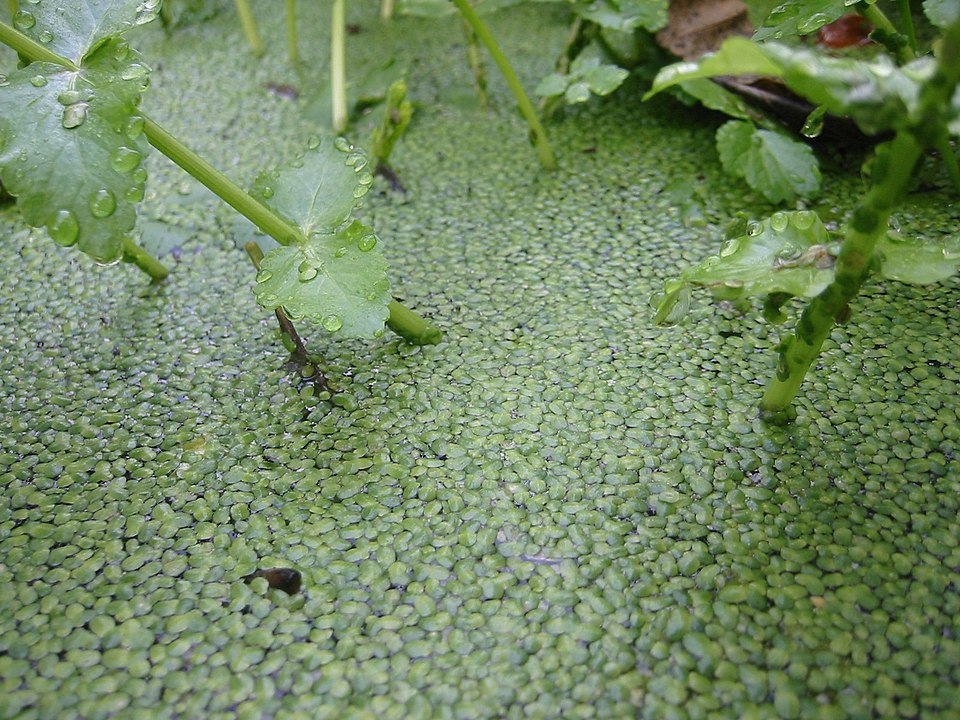 Common Duckweed
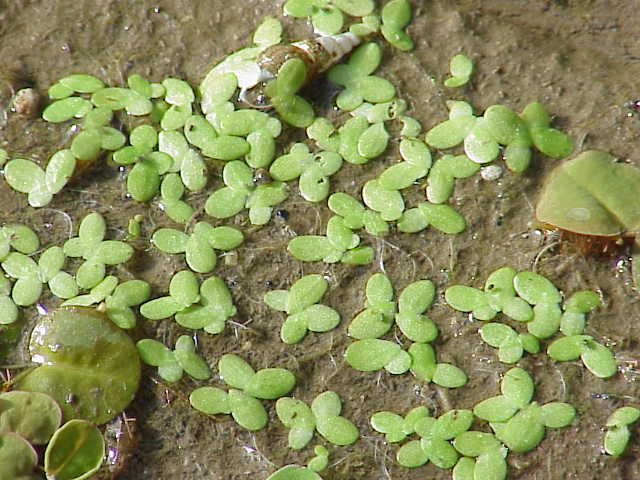 Lemna minor
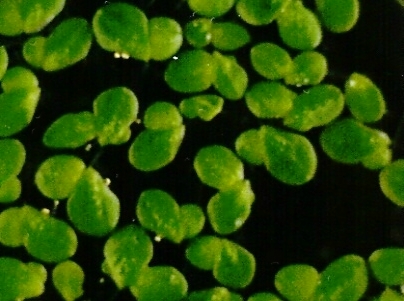 L.
gibba
L.
gibba 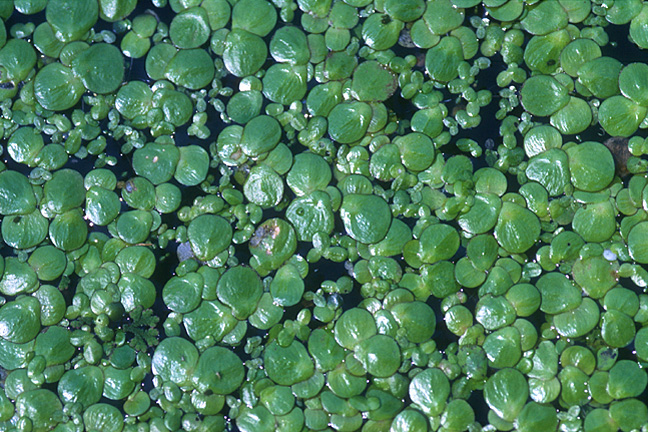 Spirodela polyrrhiza
Lemoideae
Systematics & Biology
Duckweed Aquaculture
Riemer, Donald
Duckweed Aquaculture: A New Aquatic Farming System for Developing Countries
Paul Skillicorn, William Spira, William Journey, World Bank
Duckweed Ethanol: Duckweed Biomass Grown From Organic Wastes to Replace Corn for US and International Ethanol Biofuel Production
Christopher Kinkaid
Water Quality. Determination of the Toxic Effect of Water Constituents and Waste Water on Duckweed (Lemna Minor). Duckweed Growth Inhibition Test
British Standards Institute Staff
Nutritional Value of the Duckweed Species of the Genus Wolffia (Lemnaceae) as Human Food
Appenroth, Klaus-J., Sree, K. Sowjanya, Bog
Growth characteristics of aquatic macrophytes cultured in nutrient-enriched water: II. Azolla, Duckweed, and Salvinia
K. R. Reddy, W. F. DeBusk
Creation of culture media for efficient duckweeds micropropagation (Wolffia arrhiza and Lemna minor) using artificial mathematical optimization models
Khvatkov, Pavel, Chernobrovkina, Mariya, Okuneva
Growing Duckweed to Recover Nutrients from Wastewaters and for Production of Fuel Ethanol and Animal Feed
Jay J. Cheng, Anne-M. Stomp
The microbiological safety of duckweed fed chickens...
S Moyo, J.M Dalu, J Ndamba
Duckweed Bioconversion and Fish Production in Treated Domestic Wastewater
de Matos, Flávia Tavares, Lapolli, Flávio Rubens, Mohedano
Duckweed ( Spirodela polyrhiza ) as green manure for increasing yield and reducing nitrogen loss in rice production
Yao, Yuanlin, Zhang, Min, Tian
Duckweed based wastewater stabilization ponds for wastewater treatment
J.M. Dalu, J. Ndamba
Duckweed systems for eutrophic water purification...
Guoke Chen &, Yang Fang &, Jun Huang &, Yonggui Zhao &, Qi Li &
Duckweed: an effective tool for phyto-remediation
Gupta, Charu, Prakash, Dhan
Duckweed as an Agricultural Amendment: Nitrogen Mineralization, Leaching, and Sorghum Uptake
Kreider, Andrew N., Fernandez Pulido, Carlos R., Bruns
Duckweed biomass as a renewable biorefinery feedstock: Ethanol and succinate production from Wolffia globosa
Soda, Satoshi, Ohchi, Takeshi, Piradee
Duckweed, A Useful Strategy for Feeding Chickens: Performance of Layers Fed with Sewage-Grown Lemnacea Species
HAUSTETN, A. T., GILMAN, R. H., SKILLICORN
Duckweed from a Biorefinery System: Nutrient Recovery Efficiency and Forage Value
SoÅta, Marcin, Åozicki, Andrzej, SzymaÅska
Duckweed based wastewater treatment (DWWT): design guidelines for hot climates
Smith, M. D., Moelyowati, I.
Duckweed-based clean energy production dynamics (ethanol and biogas) and phyto-remediation potential in Bangladesh
Nahar, Kamrun, Sunny, Sanwar A.
Duckweed culture for wastewater renovation and biomass production
Oron, Gideon
“Duckweed-Microbe Co-Cultivation Method” for Isolating a Wide Variety of Microbes Including Taxonomically Novel Microbes
Tanaka, Yasuhiro, Tamaki, Hideyuki, Tanaka
Duckweed: Its Molecular Taxonomy
M. Bog
Duckweed for Human Nutrition: No Cytotoxic and No Anti-Proliferative Effects on Human Cell Lines
Sree, K. Sowjanya, Dahse, Hans-Martin, Chandran
Duckweed as heavy metal accumulator and pollution indicator in industrial wastewater ponds
Hegazy, A.K., Kabiel, H.F., Fawzy
Use of Duckweed as Feed for Fishes in Polyculture
Kabir, ANMA, Hossain, MA, Rahman
Spirodela (duckweed) as an alternative production system for pharmaceuticals: a case study, aprotinin
Sandrine Rival, et al
Cultivating duckweed Lemna minor in urine and treated domestic wastewater ...
Iatrou, Evangelia I., Stasinakis, Athanasios S., Aloupi
Flower induction, microscope-aided cross-pollination, and seed production in the duckweed Lemna gibba with discovery of a male-sterile clone
Fu, Lili, Huang, Meng, Han
NUTRIENT REMOVAL FROM A STORMWATER DETENTION POND USING DUCKWEED
M. Perniel, , R. Ruan, , B. Martinez
Effect of Exogenous General Plant Growth Regulators on the Growth of the Duckweed Lemna minor
Utami, Desi, Kawahata, Ami, Sugawara
Advantages and limitations of duckweed-based wastewater treatment systems
Bonomo, L., Pastorelli, G., Zambon
An integrated duckweed and algae pond system for nitrogen removal and renovation
van der Steen, Peter, Brenner, Asher, Oron
https://www.youtube.com/watch?v=U_405zhZkbY
[ Duckweed ] The Fastest Growing Food on Earth:... // Buried Garden
PATENTS
https://worldwide.espacenet.com/advancedSearch?locale=en_EP
INDOOR PROCESS AND SYSTEM FOR CULTIVATING AND HARVESTING DUCKWEED
US2020060108
An indoor system and process for cultivating, harvesting, and outputting a culture of aquatic plants, namely duckweed, are provided. The system includes a water treatment system and cultivation and harvesting system. The water treatment system provides for mixing of nutrients and treated water to form a treatment mixture which is supplied to the cultivation and harvesting system for facilitating growth of the duckweed.
SYSTEM AND METHOD FOR INDOOR CULTIVATION AND PROCESSING OF DUCKWEED
US2023081407
A photobioreactor system includes a growing tower tray assembly configured to utilize laminar flow to harvest a plant; a nursery subsystem configured to feed inoculum to the growing tower tray assembly; and a nutrient feeding subsystem configured to feed nutrient media to the growing tower tray assembly.
Induction method of duckweed spore formation
CN119422779
The invention relates to a duckweed spore formation induction method which comprises the following steps: pretreating duckweed plants to obtain duckweed to be cultured; spraying the to-be-cultured duckweed according to a preset period by adopting a gibberellin solution, and stopping spraying when the to-be-cultured duckweed forms spores, so as to obtain the cultured duckweed. The to-be-cultured duckweed is regularly sprayed with gibberellin, so that the duckweed can be effectively induced to form spores, and no adverse effect is caused to duckweed plants. By means of the method, the duckweed resource breed conservation quality can be effectively improved, and remarkable effects are brought to cultivation of excellent duckweed quality and reduction of breed conservation cost
Intelligent duckweed breeding equipment
CN119183943
The invention discloses intelligent duckweed breeding equipment which comprises a rotary adjusting disc, a duckweed breeding pond, a floating breeding disc and a detection assembly, the rotary adjusting disc comprises a base, a rotating ring and storage containers, the rotating ring is rotationally embedded in the base in a sleeving mode, and the storage containers are evenly arranged on the rotating ring; the duckweed culture pond is installed at the top of the base, a console is arranged on one side of the duckweed culture pond, a discharge port is formed in the edge of the duckweed culture pond, a guide pipe is vertically arranged in the duckweed culture pond, the lower end of the guide pipe is connected with a pump body through a pipeline, and the pump body is connected with a discharge pipe; the floating type cultivation plate comprises a planting plate, an annular buoy and a longitudinal adjuster, a plurality of sets of planting openings are evenly formed in the surface of the planting plate, and planting pipes are installed at the bottoms of the planting openings. According to the designed intelligent breeding equipment, the duckweed breeding space can be effectively guaranteed, the influence of diseases and pests is reduced, and the intensification degree and quality of duckweed breeding are improved.
Water plant production system
KR102678075
The present invention relates to a floating water plant production system of a novel structure capable of effectively producing floating water plants such as duckweed and the like. The floating water plant production system according to the present invention has an advantage of being very easy to operate, by enabling floating water plants to be cultivated in a cultivation tank (10) and enabling the floating water plants that have been finished cultivating to be automatically harvested using a harvesting means (20) and a discharge conveyor. Specifically, the present invention has the advantage of enabling the water stored in the cultivation tank (10) to be repeatedly sterilized using a sterilization tank (33), a mixing tank (34), and a supply tank (36), enabling nutrients suitable for the growth of the floating water plants to be mixed into the water and simultaneously enabling a temperature of the water stored in the cultivation tank (10) to be adjusted using a temperature sensor (38) and a heater (39), and providing an environment suitable for the growth of the floating water plants.
Method for raising duckweed in rice field and pouring duckweed by using ammonium bicarbonate
CN117530127
The invention relates to the technical field of agricultural planting, in particular to a method for raising duckweed in a rice field by utilizing ammonium bicarbonate to pour duckweed, which comprises the following steps: 13-17 days before rice transplanting in the rice field, draining water in the rice field; an ammonium bicarbonate solution is prepared, the mass percentage of solute of the ammonium bicarbonate solution is 5-10%, and azolla in the rice field is manually and evenly sprayed with a sprayer. After spraying is completed, the field is put for 2-3 days, and the duckweed bodies are turned into the field to be decomposed in combination with field cultivation. The method has the beneficial effects that ammonium bicarbonate is dissolved to form an alkaline solution, and the alkaline solution is sprayed on azolla to form a concentration difference with azolla cell sap, so that water in the azolla cell sap is reversely permeated into a body, and azolla bodies wither after losing water and finally become a seedling burning phenomenon to kill the azolla. The method is good in effect, simple to operate and free of pollution.
ENHANCED PRODUCTION OF FLAVONOIDS
WO2024110539
The present invention discloses the application of Duckweed Pericarp Color1 (P1) protein homologues (P1-Ls) such as LtP1-L or LeP1-L in regulating the biosynthesis of orientin and/or isoorientin in duckweed or other plants. Specifically, P1-L was introduced into the duckweed genome and overexpressed. The transgenic duckweed generates higher content of orientin and/or isoorientin than wild-type duckweed. The present invention also discloses a method for biosynthesizing orientin and/or isoorientin: P1-L was introduced into the duckweed genome, P1-L overexpressing duckweed with higher content of orientin and/or isoorientin than wild-type plants; Cultivation of the transgenic duckweed and extraction of orientin and/or isoorientin. The present invention greatly reduces the production costs of orientin and isoorientin, and has broad application prospects and high economic value.
Ecological planting and breeding system for marsh gas, duckweed, fish and rice
CN115211339
The invention belongs to the technical field of biological purification of sewage and resource reutilization, and particularly relates to a biogas-duckweed-fish-rice coupled ecological planting and breeding system which comprises an azolla culture unit, a fish culture unit and a rice cultivation unit which are sequentially communicated from upstream to downstream, the azolla culture unit is used for culturing azolla with biogas slurry; the fish culture unit is used for culturing fish by using azolla, and the rice cultivation unit is used for cultivating rice by using a fish culture water body of the fish culture unit as nutrients; wherein the area ratio of the culture pond of the azolla culture unit to the culture pond of the fish culture unit is 1: 6; the ratio of the area of the culture pond of the fish culture unit to the area of the rice field of the rice cultivation unit is 1: (4-5). The marsh-duckweed-fishery-rice ecological planting and breeding system has the advantages that the water purification efficiency of azolla is high, the feeding value is high, the feed utilization cost is low, the aquaculture water enters the rice field and is completely absorbed by the rice field, and the purpose of zero emission of the aquaculture water is achieved.
Duckweed cultivation device
CN216982979
The utility model discloses a duckweed cultivation device, and relates to the technical field of duckweed cultivation equipment. The lighting box comprises a box body, tracks are installed on the two sides of the box body in the width direction, each track comprises a transverse section, a vertical section and an arc-shaped section connecting the transverse section and the vertical section, wheel bodies are arranged in the tracks, installation rods are coaxially installed on the wheel bodies, and lighting lamps are installed on the installation rods through connecting rods. Two sliding rails are installed on one side of the box body in the length direction, sliding blocks are installed on the sliding rails in a sliding mode, a face frame is installed on the sliding blocks through a connecting frame, a plurality of rope nets are installed in the face frame, and when the sliding blocks slide along the sliding rails, the rope nets are connected with the sliding rails. The face frame is driven by the connecting frame to move to the inner bottom of the box body or move to the position above the box body. According to the duckweed cultivation device, the defects in the prior art are overcome through the simple and practical structure, convenience is provided for duckweed cultivation, the structure is convenient to operate, and implementation is convenient to complete.
Intensive duckweed culture device
CN214961678
The utility model discloses an intensive duckweed cultivation device which comprises two first cultivation grooves, a second cultivation groove, a third cultivation groove and a fourth cultivation groove, the tops of the first cultivation grooves are open, and the first cultivation grooves are oppositely arranged up and down and are made of light-transmitting materials; the tops of the second culture tanks are open, the second culture tanks are arranged between the two first culture tanks at intervals up and down, the upper and lower adjacent second culture tanks are communicated through connecting cylinders, the adjacent second culture tanks and the first culture tanks are communicated through connecting cylinders, and the second culture tanks and the connecting cylinders are made of light-transmitting materials; the culture lamps are arranged around the first culture tank at intervals, and the bottoms of the culture lamps are arranged on the ground. According to the intensive duckweed cultivation device, three-dimensional and intensive cultivation of duckweed is achieved through the first cultivation grooves and the second cultivation grooves which are arranged at intervals, so that the occupied area is effectively saved, and meanwhile the lighting effect and the material accumulation efficiency are effectively improved.
Aquaponics system
KR20240143014
The present invention provides an aquaponics system comprising a culture tank, a supply pipe, a fish pond, a microbial purification tank, and a hydroponic cultivation tank. The culture tank includes a nursery for cultivating and raising chlorella, daphnia, infusoria, and duckweed. The supply pipe supplies an appropriate amount of plankton to three fish ponds within the culture tank and operates using a timer. The fish pond is a place where fry, mid-sized fish, and adult fish are raised. The microbial purification tank is a place where microorganisms are purified, and the hydroponic cultivation tank is a place where vegetables, flowers, ginseng, and other ingredients are cultivated. The present invention proposes a closed loop aquaponics system including a culture tank (10), a fish pond (30), a microbial purification tank (40), a hydroponic cultivation tank (50), and a purification tank (60) is proposed, characterized in that water is circulated from the culture tank (10) through the fish pond (30), and then circulated to the microbial purification tank (40), the hydroponic cultivation tank (50), and the purification tank (60) and then back to the culture tank (10).
Planting method for reducing emission, increasing yield and improving efficiency of rice
CN118556569
The invention provides a rice planting method capable of reducing emission, increasing yield and improving efficiency, and belongs to the technical field of crop cultivation. The rice planting method comprises the steps that after rice is transplanted, 180-220 g/m < 2 > of duckweed is bred in a rice field; when nitrogen is applied to rice, a nitrification inhibitor is applied in a combined mode, and the application amount of the nitrification inhibitor is 0.8%-1.2% of the nitrogen application amount. In order to solve the problems of high gaseous nitrogen loss, high nitrogen concentration of field surface water, low rice yield and low nitrogen fertilizer utilization rate of the rice field, the nitrification inhibitor is applied and duckweed is stocked in the rice field, so that the gaseous nitrogen loss of the rice field can be reduced, the concentration of horizontal homogeneous ammonium nitrogen and nitrate nitrogen on the field surface of the rice field is reduced, the water environment on the field surface of the rice field is improved, and the rice yield is increased; the nitrogen fertilizer utilization rate of rice is improved.
Method for raising duckweed in rice field and pouring duckweed by using ammonium bicarbonate
CN117530127
The invention relates to the technical field of agricultural planting, in particular to a method for raising duckweed in a rice field by utilizing ammonium bicarbonate to pour duckweed, which comprises the following steps: 13-17 days before rice transplanting in the rice field, draining water in the rice field; an ammonium bicarbonate solution is prepared, the mass percentage of solute of the ammonium bicarbonate solution is 5-10%, and azolla in the rice field is manually and evenly sprayed with a sprayer. After spraying is completed, the field is put for 2-3 days, and the duckweed bodies are turned into the field to be decomposed in combination with field cultivation. The method has the beneficial effects that ammonium bicarbonate is dissolved to form an alkaline solution, and the alkaline solution is sprayed on azolla to form a concentration difference with azolla cell sap, so that water in the azolla cell sap is reversely permeated into a body, and azolla bodies wither after losing water and finally become a seedling burning phenomenon to kill the azolla. The method is good in effect, simple to operate and free of pollution
Cultivation technology for improving quality of juvenile crabs in earth pond
CN116941575
The invention discloses a cultivation technology for improving the quality of juvenile crabs in a soil pond, which comprises the following steps: S1, soil pond selection: selecting a soil pond with the area of 1-4 mu and the water depth of 1-2.5 m, the soil pond is close to a water source, the pond shape of the soil pond is square, and the pond bottom of the soil pond is in a relatively flat state; s2, soil pond improvement: putting quick lime into the soil pond, adding water, splashing the quick lime into the pond, adding water into the quick lime to form slurry, and stirring the slurry with soil pond mud; a few days before the juvenile crabs enter the pond, water is injected into the soil pond, whether harmful organisms exist in the water or not is observed and treated, and duckweed is planted. According to the method, a cultivator plants the duckweed at the bottom of the soil pond, the duckweed enables the interior of the soil pond to be oxygenated, the survival rate of the juvenile crabs is increased, meanwhile, through the oxygenation equipment, the pre-buried pipeline and the heating pipeline, the survival rate of the juvenile crabs is increased, and the survival rate of the juvenile crabs is increased. The water quality, the water quantity and the like of the juvenile crabs are regulated and controlled, the quality of the juvenile crabs in the soil pond can be effectively improved, quick lime and water are put into the soil pond for disinfection before the juvenile crabs are cultivated, and the cleanliness degree in the soil pond is increased.
Ecological planting and breeding system for marsh gas, duckweed, fish and rice
CN115211339
The invention belongs to the technical field of biological purification of sewage and resource reutilization, and particularly relates to a biogas-duckweed-fish-rice coupled ecological planting and breeding system which comprises an azolla culture unit, a fish culture unit and a rice cultivation unit which are sequentially communicated from upstream to downstream, the azolla culture unit is used for culturing azolla with biogas slurry; the fish culture unit is used for culturing fish by using azolla, and the rice cultivation unit is used for cultivating rice by using a fish culture water body of the fish culture unit as nutrients; wherein the area ratio of the culture pond of the azolla culture unit to the culture pond of the fish culture unit is 1: 6; the ratio of the area of the culture pond of the fish culture unit to the area of the rice field of the rice cultivation unit is 1: (4-5). The marsh-duckweed-fishery-rice ecological planting and breeding system has the advantages that the water purification efficiency of azolla is high, the feeding value is high, the feed utilization cost is low, the aquaculture water enters the rice field and is completely absorbed by the rice field, and the purpose of zero emission of the aquaculture water is achieved.
Duckweed cultivation device
CN216982979
The utility model discloses a duckweed cultivation device, and relates to the technical field of duckweed cultivation equipment. The lighting box comprises a box body, tracks are installed on the two sides of the box body in the width direction, each track comprises a transverse section, a vertical section and an arc-shaped section connecting the transverse section and the vertical section, wheel bodies are arranged in the tracks, installation rods are coaxially installed on the wheel bodies, and lighting lamps are installed on the installation rods through connecting rods. Two sliding rails are installed on one side of the box body in the length direction, sliding blocks are installed on the sliding rails in a sliding mode, a face frame is installed on the sliding blocks through a connecting frame, a plurality of rope nets are installed in the face frame, and when the sliding blocks slide along the sliding rails, the rope nets are connected with the sliding rails. The face frame is driven by the connecting frame to move to the inner bottom of the box body or move to the position above the box body. According to the duckweed cultivation device, the defects in the prior art are overcome through the simple and practical structure, convenience is provided for duckweed cultivation, the structure is convenient to operate, and implementation is convenient to complete.
Intensive duckweed culture device
CN214961678
The utility model discloses an intensive duckweed cultivation device which comprises two first cultivation grooves, a second cultivation groove, a third cultivation groove and a fourth cultivation groove, the tops of the first cultivation grooves are open, and the first cultivation grooves are oppositely arranged up and down and are made of light-transmitting materials; the tops of the second culture tanks are open, the second culture tanks are arranged between the two first culture tanks at intervals up and down, the upper and lower adjacent second culture tanks are communicated through connecting cylinders, the adjacent second culture tanks and the first culture tanks are communicated through connecting cylinders, and the second culture tanks and the connecting cylinders are made of light-transmitting materials; the culture lamps are arranged around the first culture tank at intervals, and the bottoms of the culture lamps are arranged on the ground. According to the intensive duckweed cultivation device, three-dimensional and intensive cultivation of duckweed is achieved through the first cultivation grooves and the second cultivation grooves which are arranged at intervals, so that the occupied area is effectively saved, and meanwhile the lighting effect and the material accumulation efficiency are effectively improved.
Rice cultivation method capable of effectively reducing cadmium content of rice
CN120476991
The invention discloses a rice cultivation method capable of effectively reducing cadmium content of rice, and relates to the technical field of rice cultivation methods, the rice cultivation method comprises the following raw materials in parts by weight: a base fertilizer, a cadmium reducing agent, a biochar-loaded microbial agent, a nano-hydroxyapatite suspension, a humic acid-silicon material, magnetic biochar and a duckweed seed source, and comprises the following steps: in a germination period, carrying out germination; detecting the cadmium content of a rice seed culture solution, adding a charcoal-loaded microbial inoculum and a nano-hydroxyapatite suspension to adjust the pH value, spreading rice seeds into the culture solution, and soaking; in the seedling stage, a humic acid-silicon material and magnetic biochar are spread; in the period of seedling establishment, duckweed seed sources are sown, base fertilizer is applied after irrigation, seedlings are transplanted, and fishes are put synchronously; in the tillering stage, the cadmium content of the duckweed is monitored, and nano silica sol is sprayed; removing duckweed before heading; in the young ear stage, the cadmium reducing agent is added twice, and by means of pollution removal, physiological barrier and resource circulation, absorption and transfer of cadmium are reduced, bioavailability of cadmium is reduced, and the cadmium content of rice is effectively reduced.
Cherax quadricarinatus cultivation greenhouse
CN210226572
The utility model discloses a cherax quadricarinatus cultivation greenhouse. The system comprises a heat preservation shed (1) and a culture pond (2), wherein the heat preservation shed (1) covers theculture pond (2); wherein the culture pond (2) comprises a culture pond outer frame (20), an impermeable membrane (30), bagasse (40), a shrimp nest group (50) and a duckweed frame (70); wherein the impermeable film (30) is paved inside the culture pond outer frame (20), the bagasse (40) is paved on the front surface of the bottom of the impermeable film (30), the shrimp nest group (50) is paved on the bagasse (40), the duckweed frame (70) is paved on the shrimp nest group (50), and the duckweed (71) is arranged in the duckweed frame (70). The cherax quadricarinatus cultivation greenhouse provides an environment close to natural growth for cherax quadricarinatus, and is low in cost, high in flexibility, easy to manufacture and high in practicability.
Method for increasing yield of duckweed starch by optimizing spectral composition
CN108323427
The invention belongs to the field of aquatic energy plant cultivation, and provides a method for increasing the yield of duckweed starch by optimizing a spectral composition. The method comprises thesteps that duckweed is inoculated into water, cultured for 5-14 days under the irradiation condition of red light or blue light or red-blue-green mixed light and harvested. By means of the method, the cost can be saved, the production efficiency is improved at the same time, the yield of the duckweed starch is effectively increased, and the method is not limited by the nutrient condition of the water and has universal applicability.
Breeding method for improving fish cultivation output and quality in rice fields
CN108094093
The invention belongs to the aquaculture field, and relates to a breeding method for improving fish cultivation output and quality in rice fields. The method includes steps of sterilizing and disinfecting before rice transplanting; then applying organic fertilizer, inoculating 5-10kg/mu duckweed, and planting 100,000-150, 000/hm2 rice; after planting rice, stocking fish fries for 7-15 days after planting rice, wherein the stocking fry is carp and crucian with specification of 50-100g/fish; 300-400 fishes are stocked in every mu totally. Through practice, the breeding method for improving fishcultivation output and quality in rice fields can significantly improve the output of the cultured fishes, which is improved by over 30% in comparison to that of a contrast pond; meanwhile, the quality of the cultured fishes is kept; the duckweed is cultivated in the pond specially, thus the domestic sewage or other waste water can be purified; the method has good economic benefit and ecological benefit.
Method for increasing total duckweed starch yield by promoting hypopus formation
CN107548982
The invention belongs to the field of aquatic energy plant production, and provides a method for increasing the total duckweed starch yield by promoting hypopus formation. The method comprises the steps that duckweed is inoculated in water, cultivation is performed for 14-30 days under the condition of irradiation of red light or blue light or red-blue mixed light, and duckweed hypopus and thallusare harvested. The method can improve the production efficiency while the cost is saved, the total duckweed starch yield is effectively increased, and the method is not limited by water nutrient status and has the general applicability.
Intensive cultivation device of red duckweed germplasm resources
CN206686830
The utility model provides an intensive cultivation device of red duckweed germplasm resources, the device comprises cultivation groove and cultivation panel, and the cultivation panel is bilayer structure, arranges in on the cultivation groove, be equipped with cultivation cup hole on the cultivation panel, cultivation net cup is arranged in on the cultivation cup hole, cultivation net cup by saucer and cup net system one -tenth, cup net for network structure, net aperture is less than the individual average diameter of red duckweed. The utility model discloses a main advantages lies in: cultivate when can realize the red duckweed of different cultivars (being), solve the red duckweed of many varieties (being) while breed conservation, expand numerous problem, and light simple and easy going, effectively shading, algae growth in the suppression nutrient solution creates the advantage for red duckweed grows, the intensive cultivation of red duckweed has effectively been realized, it is not only energy -conserving, improved efficiency moreover, reduced work load, convenient operation has great application promotion and worth.
Preparation method of safe biological algicide
CN106538635
The invention discloses a preparation method of a safe biological algicide, and belongs to the technical field of algicide preparation. The preparation method comprises following steps: firstly, onion and narcissus bulbus are washed and peeled, are subjected to freeze drying, and are smashed into powder; enzymolysis cell wall broken is carried out with pectinase and cellulase so as to release effective components in cells fully, absolute ethyl alcohol is taken as a precipitator for precipitation, and a white extracted powder is obtained via drying; livestock manure is subjected to composting so as to obtain nutritional ingredients; mixed cultivation of alternanthera philoxeroides, duckweed, and alga is carried out in a water tank so as to obtain inhibitors via mutual competition; obtained alternanthera philoxeroides and duckweed are juiced, an obtained juice is filtered, and an obtained filtrate is mixed with the white extracted powder at a certain ratio so as to obtain the safe biological algicide. The safe biological algicide possesses excellent inhibiting effect on bloom algae, and is capable of solving the residue problem of applications of chemical agents effectively; no pollution of human drinking water source is caused; and the safe biological algicide is beneficial for the stability of aquatic ecosystem.
Mushroom growth substrate and production method
TW201713205
A mushroom growth substrate and a production method thereof are disclosed, which use duckweed as a growth substrate for mushroom. The production method comprises series of pulverization, dehydration, drying and sterilization which are utilized for producing the growth substrate. Further, a method using the duckweed for the mushroom cultivation is provided, which comprises the steps of: (A) providing the duckweed and pulverizing the duckweed; (B) dehydrating the pulverized duckweed; (C) drying the dehydrated duckweed obtained in step (B); (D) packing and sterilizing the dried duckweed obtained in step (C); (E) performing an inoculation step in an aseptic space and sealing a container; and (F) unsealing the container until hyphae entirely grow on the growth substrate to get mycelium.
Duckweed fishing device
CN105297694
The invention discloses an efficient and automatic duckweed fishing device, and belongs to the technical field of energy plant cultivation. The aim of automatic fishing of duckweeds cultivated in a large scale is achieved. The duckweed fishing device comprises a motor, a gear case, a rotary shaft, a winding drum, a steel wire rope, a duckweed collecting hopper, a supporting frame and a rail frame. The rail frame is composed of a rail and a cross beam. The rail is divided into a vertical part and a bent part. A gear is driven by the motor to rotate, and then the rotary shaft and the winding drum are driven to rotate. The winding drum is fixed to the cross beam, and the steel wire rope is fixed to the winding drum. The steel wire rope is controlled by the rotating winding drum and connected with the duckweed collecting hopper. A steel wire net is arranged at the bottom of the duckweed collecting hopper. The duckweed fishing device is simple in structure and ingenious in design, automatic duckweed fishing can be achieved, and the duckweed cultivation efficiency is improved.
Selenium tolerance duckweed cultivation method
CN104541897
The invention relates to the field of biotechnology and particularly provides a selenium tolerance duckweed cultivation method. The method includes the steps of using duckweed (Landoltia punctata) collected from the wild and pre-cultivated in a laboratory as a mother plant, and placing the duckweed in a medium containing selenium cultivation in a photobioreactor by 12 h-16 h/day at the temperature of 20 DEG C-25 DEG C, wherein the concentration of selenium in the medium is no more than 160 mu mol/L. According to the selenium tolerance duckweed cultivation method, the duckweed pre-cultivated in the laboratory and screened as a carrier of selenium, has good characteristics of high light and high temperature adaptation, high selenium content and the like and is high in sodium selenite salt absorption efficiency, high in conversion capability and significant in concentration effect of selenium of low concentration during duckweed proliferation.
Duckweed cultivation method
CN104255415
The invention relates to a high-protein duckweed cultivation method and in particular relates to a flowing-state water culture method. The duckweed cultivation method comprises injecting a culture solution into a culture pool, inoculating the duckweed to the surface of the culture solution, keeping the culture solution into the culture pool in a flowing state and regularly harvesting the duckweed by salvaging, wherein the culture solution is sewage containing nitrogen and phosphorus and the hydraulic retention time of the culture solution in the culture pool is 15 days to 35 days. In order to meet the demand on efficient production of the duckweed, the culture poon is designed to be formed by connecting a plurality of sub-pools in series; a water inlet is formed in the front end of the culture pool, while a water outlet is formed in the rear end of the culture pool; a connector is arranged between every two adjacent sub-pools and all the connectors are arranged up and down alternately; meanwhile, a biological filler can be additionally arranged in the culture pool. The duckweed cultivation method is capable of producing the duckweed high in crude protein content stably and efficiently, and is simple to operate and low in cost; besides, the method is not limited by seasons and is easy to popularize and utilize; in addition, with the added biological filler, the effects of efficiently producing the duckweed and reducing the ammonia concentration in the sewage can be achieved simultaneously.
Living duckweed material storage method
CN104025989
The invention discloses a living duckweed material storage method. The living duckweed material storage method aims to overcome the defects that according to a duckweed germplasm resource storage method in the prior art, duckweed germplasm resources are prone to being infected with alga, the method is limited by natural growth seasons and is high in cost, and clean research materials cannot be provided for precise experiments at any time. Duckweed and azolla are cultivated in a cultivation container at the same time, and the cultivation container is placed in the natural environment. Preferably, the ratio of the number of the duckweed to the number of the azolla is controlled to be 2:1-4:1, a Hogland standard nutrient solution diluted by 20-30 times is adopted as an initial culture solution, and tap water is added properly in the cultivation process. The method can permanently and effectively prevent pollution caused when the living duckweed is infected with the alga in the storage process, and clean research materials are provided for precise experiments. By means of the method, the duckweed can keep in the natural state at any time so that the demand for materials of scientific experiment research can be met at any time.
Semi-automatic duckweed collecting and airing device
CN203514286
The utility model relates to a semi-automatic duckweed collecting and airing device which is especially applicable to efficient collection and airing of duckweeds in large-scale duckweed cultivation and sewage processing river ways. The device comprises a water pump and is characterized by further comprising an airing plate and a conveying belt. A water pumping pipe is installed on a water outlet of the water pump, a wide opening device is arranged at a water inlet of the water pump, a blocking net is arranged on the wide opening device, the conveyor belt is arranged in front of the blocking net, a part of the conveying belt is arranged underwater, the other part is arranged on the shore, and an included angle of 110-140 degrees is formed between the conveying belt under water and the conveying belt on the shore. By means of the collecting and airing device, the duckweeds are directly fished on the airing plate with the thickness under the natural condition of water, the problem that the duckweeds are difficult to collect is solved, airing is convenient, and working efficiency is greatly improved. The collecting and airing device has the advantages of being simple in structure, easy to construct, less in investment, less in consumption and high in efficiency. The device is arranged on the water side, is not limited by natural environment, and allows automatic collection.
METHOD FOR YEAR-ROUND INDUSTRIAL CULTIVATION OF DUCKWEED FOR FARM LIVESTOCK FEEDING
RU2006125955
SUBSTANCE: invention relates to agriculture, particularly to production of heavy protein and vitamin mineral feeders and additives, wherein duckweed is grown in cuvettes with nutrient solution and natural or artificial lighting applied. Cuvettes are 5-15 m long, 1-4 m wide and 0.12-0.15 m deep and made of water-proof material. Nutrient water-mineral solution contains macro-elements - nitrogen, potassium, calcium, magnesium and micro-elements - iron, boron, zinc, copper, manganese, cobalt and iodine. Quantity of the planted duckweed makes up 0.5 kg/m2 of nutrient solution surface. 50% of total mass of cultivated duckweed from 1/7 of total quantity of cuvettes are collected daily. From April to October cultivation is fulfilled outdoors at ambient temperature and duration of light day. From October to April duckweed is grown indoors under artificially created conditions with automatic control of solution surface level and duration of light day. ^ EFFECT: method provides for industrial production of heavy protein and vitamin mineral feeder which is digested well by farm livestock.
Cultivation and planting method utilizing interaction among biological factors
CN109452110
The invention relates to a cultivation and planting method utilizing interaction among biological factors, which comprises the following steps: ridging in a dry field, wherein the ditch width is not more than 0.8m, the ditching area is less than 40%, and the planting density of rice is not less than 10,000 stumps per mu; adopting a natural no-tillage mode, a dry-tillage mode and a paddy-dry rotation mode for circulation; planting crops on the ridges; in the natural no-tillage mode, the animals are cultivated in ridge ditch, and combining the soil surface cultivating duckweed and the water surface cultivating duckweed. By adopting three modes of cyclic execution and starting from the interaction among biological factors, an optimization mode of rice, duckweed and fish is established to realize the sharing of the living space of the rice-duckweed-fish so as to realize the diversity compatible combination of multiple biological factors; the cultivation and planting method utilizing interaction among biological factors effectively overcomes the problems of overlapping food resources and mutual exclusion of environmental requirements among various biological elements, and maintains theoperation of the system by the coordination of mutual relations in the ecosystem, thereby realizing the ecological technical mode of stable production and increased income and easy popularization through cultivation and planting.
Breeding method for improving fish cultivation output and quality in rice fields
CN108094093
The invention belongs to the aquaculture field, and relates to a breeding method for improving fish cultivation output and quality in rice fields. The method includes steps of sterilizing and disinfecting before rice transplanting; then applying organic fertilizer, inoculating 5-10kg/mu duckweed, and planting 100,000-150, 000/hm2 rice; after planting rice, stocking fish fries for 7-15 days after planting rice, wherein the stocking fry is carp and crucian with specification of 50-100g/fish; 300-400 fishes are stocked in every mu totally. Through practice, the breeding method for improving fishcultivation output and quality in rice fields can significantly improve the output of the cultured fishes, which is improved by over 30% in comparison to that of a contrast pond; meanwhile, the quality of the cultured fishes is kept; the duckweed is cultivated in the pond specially, thus the domestic sewage or other waste water can be purified; the method has good economic benefit and ecological benefit.
Method for increasing total duckweed starch yield by promoting hypopus formation
CN107548982
The invention belongs to the field of aquatic energy plant production, and provides a method for increasing the total duckweed starch yield by promoting hypopus formation. The method comprises the steps that duckweed is inoculated in water, cultivation is performed for 14-30 days under the condition of irradiation of red light or blue light or red-blue mixed light, and duckweed hypopus and thallusare harvested. The method can improve the production efficiency while the cost is saved, the total duckweed starch yield is effectively increased, and the method is not limited by water nutrient status and has the general applicability. Cultivation method for increasing duckweed starch content and application
Cultivation method for increasing duckweed starch content and application
CN107548990
The invention relates to the field of aquatic energy plant cultivation, in particular to a cultivation method for increasing the duckweed starch content and application. The cultivation method for increasing the duckweed starch content comprises the following steps that duckweed is inoculated on the surface of water, then, a uniconazole solution is sprayed to the surface of the duckweed growing inthe water, then, CO2 is introduced, and a target duckweed product is obtained. The method is not limited by the water, the duckweed starch content can be increased greatly no matter whether the duckweed is in relatively-eutrophic water or relatively-oligotrophic water, the duckweed with the high starch content can be cultivated in large scale in the polluted water, the high-content starch can berapidly accumulated, meanwhile, nitrogen and phosphorus in sewage can be effectively removed, on one hand, the production cost is lowered, and the duckweed with the high starch content is obtained; onthe other hand, the problem confronted at present that water is contaminated by nitrogen and phosphorus can be effectively relieved, and the method is easy to implement, low in cost and easy to applyand popularize.
Intensive cultivation device of red duckweed germplasm resources
CN206686830
The utility model provides an intensive cultivation device of red duckweed germplasm resources, the device comprises cultivation groove and cultivation panel, and the cultivation panel is bilayer structure, arranges in on the cultivation groove, be equipped with cultivation cup hole on the cultivation panel, cultivation net cup is arranged in on the cultivation cup hole, cultivation net cup by saucer and cup net system one -tenth, cup net for network structure, net aperture is less than the individual average diameter of red duckweed. The utility model discloses a main advantages lies in: cultivate when can realize the red duckweed of different cultivars (being), solve the red duckweed of many varieties (being) while breed conservation, expand numerous problem, and light simple and easy going, effectively shading, algae growth in the suppression nutrient solution creates the advantage for red duckweed grows, the intensive cultivation of red duckweed has effectively been realized, it is not only energy -conserving, improved efficiency moreover, reduced work load, convenient operation has great application promotion and worth.
Duckweed material storage method
CN104025989
The invention discloses a living duckweed material storage method. The living duckweed material storage method aims to overcome the defects that according to a duckweed germplasm resource storage method in the prior art, duckweed germplasm resources are prone to being infected with alga, the method is limited by natural growth seasons and is high in cost, and clean research materials cannot be provided for precise experiments at any time. Duckweed and azolla are cultivated in a cultivation container at the same time, and the cultivation container is placed in the natural environment. Preferably, the ratio of the number of the duckweed to the number of the azolla is controlled to be 2:1-4:1, a Hogland standard nutrient solution diluted by 20-30 times is adopted as an initial culture solution, and tap water is added properly in the cultivation process. The method can permanently and effectively prevent pollution caused when the living duckweed is infected with the alga in the storage process, and clean research materials are provided for precise experiments. By means of the method, the duckweed can keep in the natural state at any time so that the demand for materials of scientific experiment research can be met at any time.
Method for quickly increasing content of starch in duckweed
CN103609304
The invention belongs to the field of cultivation for aquatic energy plants, and provides a method for quickly increasing the content of starch in duckweed by the aid of plant growth regulators. The method includes steps of planting the duckweed in water; spraying uniconazole solution or paclobutrazol solution on the surface of the duckweed which grows in the water; allowing the duckweed to continue growing for 7-10 days after the uniconazole solution or the paclobutrazol solution is sprayed on the surface of the duckweed and then harvesting the duckweed with the high content of the starch. The method has the advantages that the method is free of constraints of water conditions, and the content of the starch in the duckweed can be greatly increased no matter whether the duckweed is planted in eutrophic water or in oligotrophic water.
Duckweed cultivation method
CN103098642
The invention discloses a duckweed cultivation method and aims to provide a measure which is suitable for keeping vigorous growth of duckweeds in winter. The technical scheme of the duckweed cultivation method is that an anti-drop film is covered on a cultivation tank. The duckweed cultivation method disclosed by the invention is operated according to the following steps of: (1) selecting the cultivation tank; (2) building a vinyl house on the cultivation tank and covering an anti-drop film on the vinyl house; (3) cultivating the duckweeds; and (4) fishing the piled duckweeds. The technical scheme adopted by the invention is simple and convenient to operate; and the output of the duckweeds cultivated by the technical scheme is high so as to provide a lot of green fodders for poultry and livestock in winter.
ORGANIC WASTE RESOURCE RECOVERY METHOD USING DUCKWEED
WO2011145316
Disclosed is a method for effective resource recovery from organic waste. The disclosed organic waste resource recovery method using duckweed includes the following steps: a culture medium acquisition step for acquiring a culture medium for cultivating duckweed from organic waste; a first cultivation step for adding the culture medium to a duckweed growth system and cultivating duckweed; a second cultivation step for cultivating duckweed in a state wherein the amount of culture medium added has been reduced relative to that in the first cultivation step; and a collection step for collecting the duckweed after cultivation, having undergone the second cultivation step.
FIXATION OF CARBON DIOXIDE GAS WITH WOLFIA OR DUCKWEED
JPH06113690
PURPOSE: To provide a method for the biological fixation of carbon dioxide gas, effective in reducing the energy necessary for the cultivation work in a fixation of carbon dioxide gas by the photosynthesis of a plant, using a culture facility having a low building cost, enabling efficient absorption and fixation of carbon dioxide gas, etc., exhausted from a power plant even in an open system and stable to the invasion of small animals, etc. CONSTITUTION: A culture liquid having a carbon dioxide gas concentration increased by the addition of carbon dioxide gas, is introduced into a paddy field 24 or a water tank, passed under Wolfia or Spirodela polyrhiza schleid (a duckweed) to effect the absorption and fixation of carbon dioxide gas to the weed add the treated culture liquid is discharged from the paddy field 24 or the water tank.
METHOD AND APPARATUS FOR REMOVING NUTRITIOUS SALT WITH AQUATIC PLANT
JPS57159596
PURPOSE:To efficiently cultivate an aquatic plant all the year round, by supplying eutrophicated water to the initial-end tank of a module tank group constructed by a desired number of tanks communicated together and let contain the aquatic plant in them, and taking out a grown-up aquatic plant outside the system. CONSTITUTION:Eutrophicated water is pumped up from a crude water tank 13 to a high-level water tank 12, and continuously fed into a module water tank 4a at the initial-end position of a series of each module 4 in a manner such that the water level is held constant. As a result, the eutrophicated water 24 is supplied to each water tank 4 up to a level suitable for cultivation of an aquatic plant such as a duckweed. A sufficient amount of natural light penetrates through a roof 1a and a wall 1b into the interior of a building 1 having closed structure to collect the natural light. The natural light is irradiated to the aquatic plant 20 inside each module water tank 4. The proliferated grown-up aquatic plant 20 is entirely ladled out from the tanks by every tank unit and discharged outside the system.
AQUACULTURE MODE AND IT'S CULTIVATING DEVICE
WO2006060935
The invention relates to a aquaculture mode and it's cultivating device, comprising a fish-culture tank and so on, wherein one or more read duckweed or seaweed cultivation beds are placed on the fish-culture tank, water in the tank is transmitted to the top layer of the cultivation bed by a pump-line, then flows through each layer of the cultivation bed. Each layer of the cultivation bed is a water vessel which has a outlet to the adjacent lower cultivation bed on the bottom, a layer of read duckweed or seaweed is cultivated on the water in the vessel A pipe-line to the fish-culture tank is provided in the bottom bed. The invention does not only assist to improve the water quality and utilization radio, but also provide food nutriment, growth and propagation by metabolism of the plant and animal, thereby improving utilization radio and productivity greatly and protecting the environment. The invention can improve water-utilization radio more than 20 times and improve the productivity more than 15 times comparing the same area.
Cultivation technology for improving quality of juvenile crabs in earth pond
CN116941575
The invention discloses a cultivation technology for improving the quality of juvenile crabs in a soil pond, which comprises the following steps: S1, soil pond selection: selecting a soil pond with the area of 1-4 mu and the water depth of 1-2.5 m, the soil pond is close to a water source, the pond shape of the soil pond is square, and the pond bottom of the soil pond is in a relatively flat state; s2, soil pond improvement: putting quick lime into the soil pond, adding water, splashing the quick lime into the pond, adding water into the quick lime to form slurry, and stirring the slurry with soil pond mud; a few days before the juvenile crabs enter the pond, water is injected into the soil pond, whether harmful organisms exist in the water or not is observed and treated, and duckweed is planted. According to the method, a cultivator plants the duckweed at the bottom of the soil pond, the duckweed enables the interior of the soil pond to be oxygenated, the survival rate of the juvenile crabs is increased, meanwhile, through the oxygenation equipment, the pre-buried pipeline and the heating pipeline, the survival rate of the juvenile crabs is increased, and the survival rate of the juvenile crabs is increased. The water quality, the water quantity and the like of the juvenile crabs are regulated and controlled, the quality of the juvenile crabs in the soil pond can be effectively improved, quick lime and water are put into the soil pond for disinfection before the juvenile crabs are cultivated, and the cleanliness degree in the soil pond is increased.